
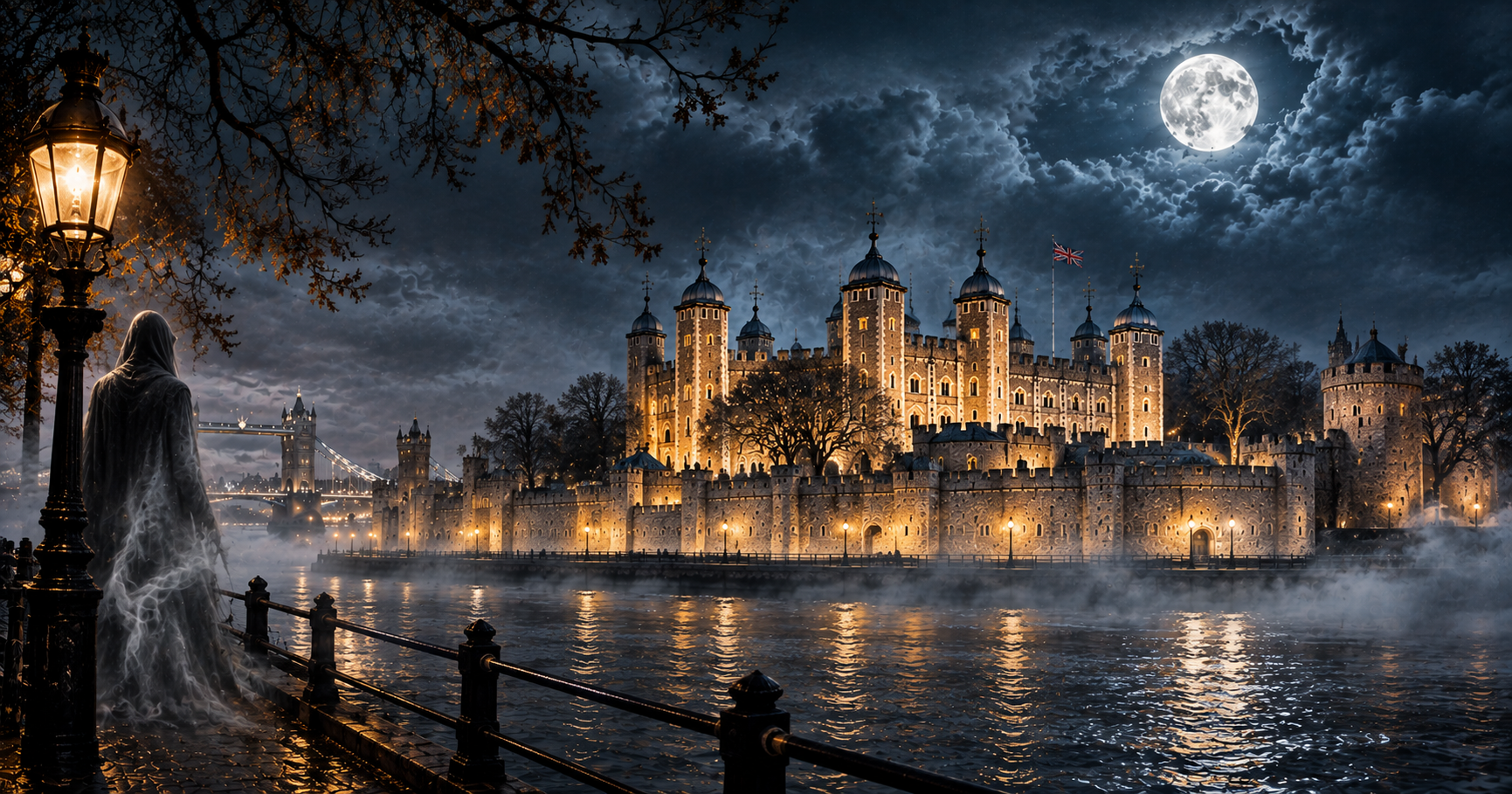
The Ghosts of the Tower of London
Dear friends, the year has progressed, and you, too, are making progress in your English studies at Training Centre Raya London. Today’s text will introduce you to new words to learn and interesting ghost stories ahead of Halloween.
The Tower of London, built on parts of the fortifications of the Roman city of Londinium, has served as a palace, a treasury, an observatory and a fortress for English nobles for centuries. But it also had a more sinister purpose: it was a prison and a place of torture for nobles who were considered troublesome to the king. Even the future Queen of England, Elizabeth I, was imprisoned there. Executions were carried out within its walls, and many prisoners of noble birth met a tragic and untimely end. Because of their fate, the place is said to be haunted by the restless souls of those who were executed. Several famous ghosts are believed to haunt the Tower, and both visitors and staff tell stories of seeing them pass by.
The Ghost of Anne Boleyn
This is probably the most enduring ghost story associated with the Tower. Anne Boleyn, King Henry VIII’s second wife, was executed on his orders following accusations of adultery, incest and treason against the Crown. She was beheaded in 1536, only three years after being crowned in a solemn ceremony. Her sorrowful shadow is said to lead a procession of nobles between Tower Green and the Chapel of St Peter ad Vincula, where she is buried.
The White Shadow of Tower Green
In 1864, one of the guards was found unconscious outside the King’s House. According to his account, a white shadow emerged and drifted towards him. Terrified, he tried to pierce it with his bayonet, but the blade passed straight through. Overcome with fear, he fainted.
Over the years, rumours have circulated about sinister crimes committed in secret behind the walls of the King’s House. People who have spent the night at Tower Green tell stories of spirits that startle them or pull them out of their beds. Nobody knows whether the White Shadow is a victim of the power games of the ruling elite or a grieving nobleman.
The Ghost of Henry VI
Every year on 21 May, a sorrowful shadow is said to glide among the stones of Wakefield Tower, which forms part of the Medieval Palace. It is believed to be the ghost of Henry VI, England’s youngest king, who came to the throne at just nine years old and had the misfortune to live during the troubled times of the Wars of the Roses.
Imprisoned in the Tower, he was murdered on that date while praying, supposedly on the orders of King Edward IV. However, it was officially announced that he had died of melancholy — an outpouring of black bile, as it was understood at the time.
The Phantom Bear
The Tower once also served as a zoo, housing animals from foreign lands that had been given as gifts to the kings of England. Perhaps this is why, during the Victorian era, stories began to circulate about the terrifying ghost of a grizzly bear that caused the death of a guard.
According to a nineteenth‑century account, the Keeper of the Crown Jewels suddenly noticed thickening grey smoke that had taken the shape of a pyramid. At its heart, a menacing figure was struggling to emerge. A guard responded to his cries for help and was immediately attacked by the figure, which took the shape of a giant bear. Two days later, the guard died.
Accounts of this terrifying spirit fuelled the Victorian interest in spiritualism and the occult.
Stories and rumours about the Tower’s ghosts continue to circulate even today. They are probably inspired by the very real human cruelty that claimed lives within the walls of this famous royal residence.
And what about you — do you believe in ghosts?
Author: Iveta Radeva

You may also like

The History of Puzzles from the 18th Century to the Present Day

