
The History of Puzzles from the 18th Century to the Present Day
Before reading the fascinating history of puzzles, dear Training Centre Raya London friends, I had no idea they were almost three centuries old. They are such a common form of entertainment in so many homes that I used to think they were a recent invention. This impression was reinforced by their glossy cardboard design and machine‑cut pieces… However, things were completely different in the beginning, and now I am going to tell you the history of the puzzle.
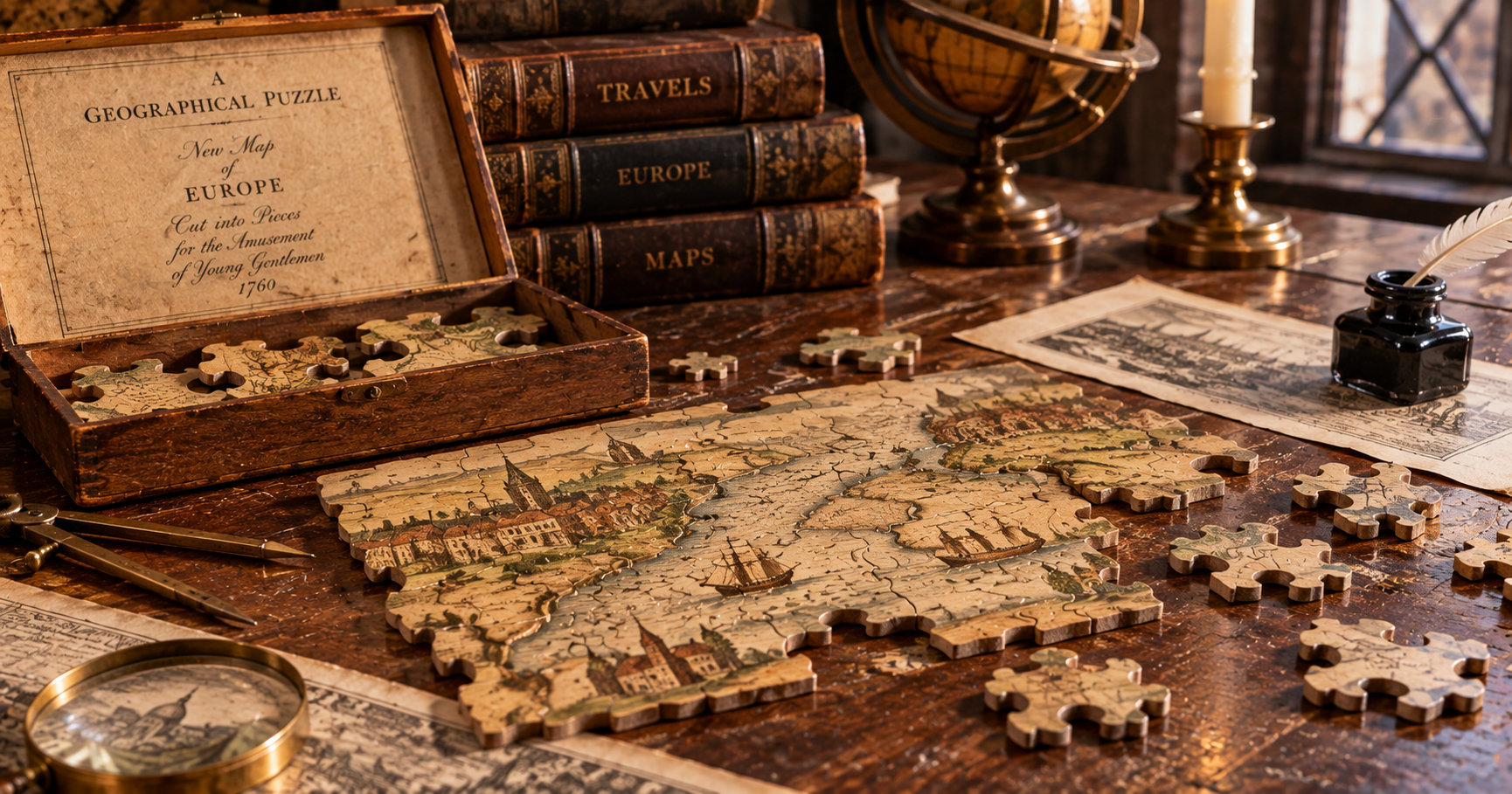
In 1739, John Spilsbury was born in London, England. Over time, his older brother — Jonathan Spilsbury, with whom he is often confused — became an engraver. Apparently, the craft was a good source of income for the family, as the second brother took it up as well. Skillful and enterprising, John became an assistant to Sir Thomas Jefferys, King George III’s geographer. He introduced himself as a cartographer and map engraver. Why, you might ask? Because Mr. Spilsbury realized he could have a map engraved on wood and cut out the different countries along their borders so they could be pieced back together. The purpose was educational, and the very first map made of moveable wooden pieces was a map of Europe. In 1760, the first sold copies of this wooden puzzle were clearly well received, as maps of Asia and the entire world were produced shortly after. John Spilsbury did not have a long life — passing away at just 30 years old — and his craft was carried on by his wife and his apprentice.
Over the years, interest in puzzles remained strong, and in addition to maps, merchants began selling landscapes, as well as scenes from the Bible and literature. Initially, they were handmade from wood, which made them expensive and meant they were used primarily for educational purposes. In the early 19th century, the first cardboard puzzles appeared, but both manufacturers and customers agreed that their quality was lower.
Also, during the 19th century, the Industrial Revolution led to the invention of the jigsaw. In the early 20th century, the name “jigsaw puzzle” became widely accepted, deriving from the very tool used to cut the interlocking wooden pictures. A jigsaw is a saw that moves up and down, allowing for the fine cutting of complex shapes. Sometimes, you might even hear the game referred to simply as a “jigsaw.” In the first decades of the last century, the quality of printing on cardboard improved, and manufacturers shifted to cardboard puzzles as a cheaper and more affordable option.
In the beginning, the primary manufacturers of puzzles were two companies founded in 1883: the American company Parker Brothers from Massachusetts — which, besides puzzles, became famous for the game Monopoly — and the German game company Ravensburger. The latter remains a leading puzzle manufacturer in Europe to this day, even though they did not start producing puzzles until later, in 1960.
What about you, friends? Do you find the time to put a puzzle together?
Author: Iveta Radeva

You may also like

The Ghosts of the Tower of London

